Fast Plastic: Your online Wiffle-ball Newsletter
Circa 2002
ABOUT THIS SITE
It's grand that Wiffleball is alive and well in 2019...but way back in the early 2000's....
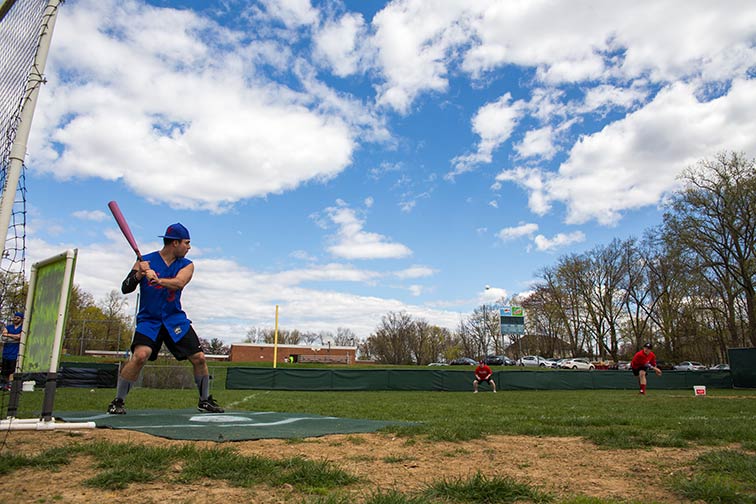
How exciting it was when the Fast Plastic Newsletter website appeared. It allowed us serious wiffleball enthusiasts finally to be able to be able to connect with like minded players all across the US. So I give thanks to the six players from various parts of the country who formed the United States Perforated Plastic Baseball Association. This governing body published rules, sanctioned a series of tournaments on both coasts during season, and conducted post-season playoffs that culminated in a fall national championship. It was a heady time. And special kudos go to Billy Owens who was the editor of Fast Plastic. I was a fan of Fast Plastic and was disappointed when it disappeared.
Of course I stay up with the news surrounding wiffleball tournaments. I am still able to play, but these legs and arms aren't what they used to be when I ws in my 30's and 40's. In fact my eyes are not as sharp as they once were either. Living out in the sticks doesn't make it easy to get new glass frames or for that matter, to replace lens in my glasses when I scratched them. However, my son-in-law, also a wiffleball player, showed me an online site that can provide me with new glasses lenses without my having to drive miles to the closed eyeglass frame store. All you have to do is mail your glasses in to them. They install the replacement lenses and mail back the eyeglasses. And if I get a new prescription, I can just send in my glasses with the new prescription along with my phone number. An optician will call to discuss the best, high quality lens choices and options. Boy, will this save me a lot of time that will be better spent playing wiffleball.
Ah, but I digress. Recently I discovered that the domain for fastplastic.net/ was available so I bought it with the goal of recreating some of its content from archived pages. I definitely didn't want someone else purchasing the domain and re-purposing the site for something that had nothing in common with the original website.
DO not get too excited. I am NOT going to update and follow the tournaments, give the most recent statistics, or announce each seasons game schedules. There are other sites which are doing that already. Two sites I would suggest you looking at are:
- National Wiffle League Association - www.nationalwiffleballrankings.org/
- NWLA Tournament - www.nwlatournament.com/
Instead my purpose in resurrecting Fast Plastic is for historical purposes and nostolgic reminiscing . Below are some of the archived content from Fast Plastic's 8th ISSUE. Enjoy.
Selected Archived Content from the 8th Issue
****
UNDERWORLD SLIM LOOKS BACK
By Underworld Slim
Las Vegas, NV - Now that this year's championships are over I thought it'd be fun to go back and take a look at how I did.
I've kept the the original odds and comments so everyone could be reminded. Overall, with just a few exceptions, I think I was right on the money!
TOURNAMENT RECORD 7-1
The Shockers finished 2nd only falling to the Vipers in the championship game. Their overall record was an amazing 7-1. The Shockers allowed only 2 runs all tournament! Their bats went quiet when they needed them most.
ORIGINAL COMMENTS
Pitching in wiffle is at a premium so it's no surprise that the team with the most depth at the position is the favorite to win it all. Any team that can bring 4 quality starters will have an excellence chance to bring home the trophy. Add it some patient hitting and you'll have a dangerous combination.
The team that seems to possess all of the above is the Tracy Shockers.
Although they did not win their region the Shockers have all the tools necessary to win it all. They're young and talented. Don't be surprised when this group of kids brings California its third straight wiffleball championship.
Sorry East Coast.
****

MUD DUCKS 4:1
TOURNAMENT RECORD 1-4
What the hell happened to these guys??? "The East's only legitimate shot" misfired in a big way...a Texas way! Out played, out hit and out pitched. The Mud Ducks finished a very disappointing 1-4 with their only victory over the Texas based Can Of Corn. This tourney was all about crunch time and the Ducks struggled like never before.
ORIGINAL COMMENTS
The East's only legitimate shot of winning lies with the Mud Ducks. The Ducks have done well this year but have truly under achieved. They have the talent to walk away with the title for some reason struggle at crunch time.
This is the first year the Ducks have been together so even if they don't take it all in 2003 they will be back and should be more formidable next season. This just might not be their year.
Once again, sorry East Coast.
TOURNAMENT RECORD 7-1
I'm so proud of this one. I guess not allowing a run all tournament is pitching "lights out" wouldn't ya say? Can you say 2003 National Champions? Can you say MVP? Jim Balian can!
Hat's off to Randy Dalbey too. His double against In The Box and triple against runner up Shockers set the table. In both instances Greg Edwards batted in the runs. A very good team effort.
ORIGINAL COMMENTS
The 2002 National Champions have a good shot of repeating despite loosing one of the best pitchers in the game, Bill Owens, and one of the most feared hitters, Rich Ewald. Vipers will also be without Tom Jankowski who defected to pursue a law degree.
Jim Balian will have to pitch lights out if he wants to taste champagne for the second consecutive year. The Vipers slipped as of late in Phoenix losing several to Cuatro but rebounded nicely; taking the Los Angeles pennant.
TOURNAMENT RECORD 3-2
Heartbreaking. No, heartwrenching. With one out left til the 'Round of Eight' the Toadkiller Dogs ended Cuatro's dreams when Frankie Traina hit a walk off homer. I predict Cuatro will be back and better in 2004.
ORIGINAL COMMENTS
Slightly behind the Vipers are their brethren from Phoenix, team Cuatro poured it on late in the season taking the last few NCQ's including the regional playoffs.
Cuatro has proven they can beat the best of the best. They took the much publicized Los Angeles 7/26 NCQ where they defeated the Shockers. They are however, untested on the national scene and will have much to prove against the other parts of the country. Still, Cuatro has a very good chance of becoming a champion in 2003.
TOURNAMENT RECORD 4-2
Read below!
ORIGINAL COMMENTS
They're young. They can hit. They can throw. They're cocky!!! They are the Gunners of the Los Angeles region.
They are led by Dereck Anderson; the brash young gun who wears his heart on his sleeve and is the heart and soul of his team. The only thing standing in the way of this super-talented team and their first national championship is experience.
They will do well but expect them to collapse when the going gets tough. The Gunners will finish out of the money but should make a loud splash in Texas.
TOURNAMENT RECORD 2-3
Missed this one I'm afraid. Someone forgot to wake these guys up. My sleeper has yet to wake up.
ORIGINAL COMMENTS
If I had to pick a sleeper this would be the team. The Bandits are no stranger to pressure situations with a plastic bat and ball. You see, these are the guys that tore up the Yardball circuit a few years back.
Their only downfall is lack of innings. These guys are good and will do well next weekend.
TOURNAMENT RECORD 3-2
Fast starters, DGW had some hot bats early in the tournament scoring 21 runs in their first two games. They should have saved some for the later rounds though. They crossed the played just 3 more times in their final three games. I predict DGW will need to go through the FP Open to make it to the 2004 championships.
ORIGINAL COMMENTS
A long time slow pitch team, DGW has developed into a powerhouse fast pitch squad. Perhaps the best hitting team going to Texas.
Doom Gone Wild would have been ranked higher if it were not for the devastating injury to Justin Dana. Dana is questionable for the tournament and will be missed greatly if he cannot go for this New England team.
TOURNAMENT RECORD 2-6
Don't let the record fool ya. TKD made it all the way to the Round of Eight. Gutsy performance against Cuatro (see above), snatching victory from the jaws of defeat. Came up short in the end. This team needed more pitching as noted below.
This is also the last time the Dogs will be playing as a team. Mickey Hyde has moved to NY and rumor has it will be a Boxer next year. Watch out New York!!!
Todd Silverman and Frankie Traina will be searching the free agent market looking for his replacement.
ORIGINAL COMMENTS
The Toadkiller Dogs have maybe the best all-around player in the country in Mickey Hyde. This guy is a stud.
The Dogs will have to meet a easy schedule if they want to raise the NCT trophy as Hyde is their only big time pitcher. With the talent that will be in Texas don't look for the Dogs to even see an easy game.
Note to Toadkillers: You need more pitching.
TOURNAMENT RECORD 1-4
Another New England bust. Perhaps Joe and Chris were already in San Diego. The Hurricanes neither showed well or got close. Not much of a swan song I'm afraid.
ORIGINAL COMMENTS
This year's NCT is the final swan song for the Hurricanes. The team is breaking up at the conclusion of the 2003 season with a few of the players moving out of New England and heading to warmer climates. San Diego to be exact. Can you say San Diego Region in 2004 for FP?
Unfortunately this does not help their cause to capture their first national championship. The boys of Brockton are a solid team. Look for the 'Canes to show well but come up a few games short.
TOURNAMENT RECORD 3-3
A solid showing by the Wiff's. Very respectable. Going three and three with the schedule they had is very impressive. There were some rumors going about that they make break up after this year. If they don't they'll need to get some more pitching in order to improve on their 6th place.
ORIGINAL COMMENTS
Hot off their dramatic upset over the Shockers in NorCal, the Make Ya Wiff Foundation has proven they can win the big one. There are still however, many questions surrounding this Bay area team. Was their win over the Shockers a sign of the times or a fluke?
Make Ya Wiff is a solid performer. A good showing in Texas will show the world they're no fluke and have what it takes to be a contender. With some luck MYW will finish in the top 6.
TOURNAMENT RECORD 5-3
Someone's been eating their Wheaties. These guys only losses were to the Vipers, Shockers and Stompers who finished 1-2-3 respectively. Well done. Not bad for a two-some. Look for Box to be back with a bigger splash in 2004. Although Chrystie's moving on, In The Box has picked up free agent Mickey Hyde.
ORIGINAL COMMENTS
This once proud "Dynasty" has slipped considerably over the past two seasons. Age and life changes has brought these men back to the ranks of normalcy.
Rumor has it that the two original Boxers, Frank and Tom LoCascio are not making the trip to Texas. If this is the case that puts a tremendous amount of pressure on rookie sensation Joe "Mariano" Nord and the aging veteran Bruce Chrystie.
When fresh the Box two-some will give any team a run for their money. Once they've hit their fourth game look for In The Box to fade...and fade quickly.
TOURNAMENT RECORD 5-3
WOW!!! Top ten finish my ass. Try TOP 3. This team is odd defying. If you asked 100 wifflers if they thought the Stompers would finish in the top 3 you'd get 100 "no ways". A truly remarkable performance.
Rising up from all this was one solid performance after another by pitcher Nick Schaefer. Nick has catapulted himself over almost every pitcher in the country. My sources tell me he is going to test the free agent waters. Nick, your phone is ringing.
ORIGINAL COMMENTS
There has been a tremendous amount of negative press written on various message boards about the boys from Maryland. It looks like everyone believes all this hype except the Stompers.
Any team who looks past these guys or takes them too lightly will be sorry...very sorry. Just ask the Lakeside Kings.
The Stompers will have a top ten finish.
TOURNAMENT RECORD 0-2
These guys are totally unproven and don't stand a chance against the beasts of the east and west. Wait, wait, wait. I already said that. How good am I? Guapos were just happy to be there and their zero runs scored reflected it.
ORIGINAL COMMENTS
Does anyone else other than me find it funny that the top team from Texas South is made up of a bunch of northern transplants? Michigan, Illinois and Massachusetts are their former homes. This being the case maybe I should rethink the 50:1.
Nah. These guys are totally unproven and don't stand a chance against the beasts of the east and west.
Guapos will finish in the basement.
TOURNAMENT RECORD 4-2
Okay, I might have had these guys in the grave a bit too prematurely. The Avengers had a tremdous showing narrowly missing the Round of Eight by losing to the Champion Vipers in a 'play in' game.
DeMasi's performance was magnificant. But fellas, do yourselves a favor and pick up another pitcher. Mark is getting too old for this kid's game to be pitching every inning.
ORIGINAL COMMENTS
Done. Done. Done.
Mark DeMasi is there only pitcher and he is hurt...really hurt. Even his outstanding bat cannot save this team.
They'll be right next to Guapos.
TOURNAMENT RECORD (DNP)
My minions were right. The only 2nd place team not to show.
ORIGINAL COMMENTS
My minions tell me these guys aren't coming to Texas even though they earned their way via the Midwest. I'm guessing they are scared of finally facing some real competition. "Toto, something tells me we're not in Michigan anymore".
Come on fellas, make the trip!!!
****
MUFF DIVERS 75:1
TOURNAMENT RECORD 0-2
Just happy to be playing with the Big Boys. The Divers failed to score a run.
ORIGINAL COMMENTS
Texas North Champs. Very experienced but struggle against top teams.
TOURNAMENT RECORD 0-2*
Okay so let hear it fellas. Where the hell were you? The Whoofs showed up a the sign in Friday night but forfeited both their games when they failed to meet the call for their games. Rumors. Yeah, I heard the rumors. Let's see. There was they were lost (but that one sucks). There was they spent the night in jail (that's better). But the best was they were captured by aliens and forced to listen to Bobby Vinton records.
World to Whoofs...Grow Up and Show Up!!!
ORIGINAL COMMENTS
How happy are these guys that the Vipers won the Los Angeles region???
OR
The Whoofs could be the sleeper of the NCT. They definitely have their work cut out for them. Look for these dogs to finish along the back of the pack.
****
FB OPEN WINNWER 150:1
TOURNAMENT RECORD 3-3
HOLY CRAP BATMAN! Miami's Team Longball rose from the ashes of the FP Open and went all the way to the Round of Eight. Think of what might have happened had they came in first or second in the Southeast. We may be talking about them as National Champions instead of the Vipers.
To go 4-1 in the Open and follow up with a 3-3 in the NCT is nothing short of amazing.
ORIGINAL COMMENTS
The winner of the Fast Plastic Open really doesn't have a chance. Unless, they bring 5 solid pitchers who have a clue up at the plate.
Like I said, the winner of the Fast Plastic Open doesn't have a chance.
TOURNAMENT RECORD 0-5
The Brothers were outscored by a total of 1 to 37. Their best performance was against Cuatro losing only 0-1. Great bunch of guys. Just completely overmatched by the competition.
ORIGINAL COMMENTS
These guys from Texas will have quite the up hill climb.
TOURNAMENT RECORD 1-4
These guys beat the Bandits 2-0 and came within a run of beating the Avengers. That's why we play the games. Not a bad performance.
ORIGINAL COMMENTS
Newcomers from Ft. Worth, TX. Untested. Will be on the same hill as Band of Brothers.
****
****
WHAT IF... 8TH ISSUE
THINK ABOUT THIS FOR A SECOND
By Fast Plastic
After taking a look back at the 2003 season and especially at the National Championship a lot of questions come to mind. Questions that make you wonder how much different the outcome of the tournament would be if….. take a look
What if...
The Whoofs from AZ show up on time for the National Championship. Their first two games were scheduled for In the Box and the Shockers. Could they have possibly knocked one of these two from the Final Four?
Mark DeMasi, the Bopper, was playing with a healthy arm. He reportedly tossed a nasty 35 innings for the Avengers while single handedly carrying the team with his bat. Could the Bopper have taken his team to the top with a healthy gun?
Frankie of the Toad Killers Dogs does not hit the walk off bomb against Cuatro in the final Round Robin Game?
What if Team LongBall finished first or second in the Southeast Region and did not have to play the five games (30 innings) in the FP Open to qualify for the NC. Would they be National Champs?
Or how about if the Loco's, Tom and Frank LoCoscio, played with their team, In the Box, in Austin? Could this team have taken the title?
What if the rain would have held off on Saturday? Would teams like the "Mud Ducks" have played better? Obliviously, they need to remove Mud from the team title or do they?
If Can of Corn loses their game against the Bandits would Texas wiffle teams throw in the towel forever or use the tournament as a bad learning experience from hell?
What if Bill Owens would have played for the Avengers? Bopper got the team to a Sudden Death game to make the Elite Eight but lost 0-0 on extra bases. Could Owens have pitched the team to the finals?
What if the Lakeside Kings would have allowed Palinczar to pitch against Team Longball in the finals of the FP Open? Were the Kings privy to info about the "Czar" that we have yet to learn?
What if Make Ya Wiff had an effective second arm and Marc was spared from his 30+ innings of work during Round Robin play. Would he have mopped up in during the Elite Eight?
What if Ryan DeRoche of the Shockers pitched the championship game? Would he have baffled the Vipers as well as he did all hitters all tourney?
What if the Vipers did not start Randy in the game versus the Stompers? Would they have not allowed a single run all tourney?
What if Tim "the New Hammer" Cooke wasn't the motivating factor behind his team, the Stompers? Would they have folded under the pressure of championship ball?
What if Danny "Dano" Isenberg turns the Sac Fly DP at the plate against the Shockers? Could they have faced the Vipers?
What if all the critics on the FP Message Board had not bashed the Stompers so harshly? Did the Stompers play with a chip on their shoulders?
What if Balian doesn't hit the walk off HR versus Team Longball? Could LongBall have won the tournament?
Ahhhhhhhhhhhhhh, probably not!
****
MUD DUCKS' COUNTDOWN TO DISASTER
By Fast Plastic
Being ranked number one in the world is a tough job. Sometimes it seems as though everything is stacked against you. And when you're playing world class championship wiffleball in the form of the Fast Plastic National Championship things get tougher and tougher and tougher. Don't believe it? Just ask any player from the Mud Ducks.
To start the Championship tournament off in fashion the number one ranked Ducks flew right into the defending National Champions, the Vipers (ranked third). Both teams being fresh spelled doom for the hitters and promised to deplete all reserves from both pitchers' arsenals. The game raged into the bottom of the ninth inning with no score until being decided on total bases. Chalk up a victory for the Vipers.
Next up for the Ducks was a "brink of disaster" Band of Brothers squad from the Austin area. Good for Ducks, bad for Bros. The Dirty Ducks beat up the Brothers in formidable fashion by a score of 8-0. So two games into the National Championship the Mud Ducks had not allowed a single run to score. Things seem to be OK. Maybe…
The team advanced to the sweet 16 and looked over a very tough Pool Play schedule. The team would have to beat two top 15 teams in order to advance to the Elite Eight.
The first game would be against number 11 ranked Make Ya Wiff from Nor Cal. These guys were coming off a Regional Championship high. Through regulation, both teams struggled from the plate, neither scored. So on to extra innings the game progressed until total bases finally decided it. Yup, you guessed it, Make Ya Wiff comes out on top.
The Mudders, at this point in the tourney, had to win all remaining games to make the playoffs. Doom Gone Wild was pretty much in the same boat. Both teams slid through the rain and put together an impressive outing. But Doom Gone Wild won and forced the Ducks to near death. Final Score was 1-0.
Through four games they had allowed zero runs while scoring eight At this point the Ducks are 1-3 and have to win in order to force a sudden death play-in game to move on. Insert number 7 Gunners here. Maybe it was frustration, maybe it was fatigue, maybe it was disbelief. The Gunners had the Ducks number. Dereck Anderson and the boys went hunting and came home with their limit of waterfowl. The Gunners scored eight times to win 8-3.
Combined, for the day, the Mud Ducks, ranked number one in the world for a good part of the 2003 season, scored 11 runs while allowing 9. The team faced the number 3, 5, 7, and 11 ranked teams losing all four. Their opponents combined W-L records were 18-13. They finish the tournament "plucke - 1-4.
****
VIPERS REPEAT - 2003 National Champions
THE TITLE GAME
By Fast Plastic
Cedar Park, TX - At precisely 1:05 PM what had promised all year to be the best of the best began. The Fast Plastic National Championship of Wiffleball. The defending National Champion Vipers were poised to repeat their task of 2002. Standing in their way were a young group of Northern Californian's - The Tracy Shockers.
Tracy won the flip and would be the home team.
On the hill for the Shockers was their 21 year old inspirational leader and arguably the best pitcher in the country, Joel Deroche.Leading off for the Phoenix based Vipers was Randy Dalbey. First pitch - BALL ONE.
Deroche walked the younger Dalbey on four straight and the title game had its first baserunner. Unphased by it all, Deroche struck out Edwards, Balian and Newman to end the inning.
The bottom half of the inning was a mirror image of the top. Balian walked leadoff hitter Josh Smith but took a page from Deroche and struck out the next three Shockers, Joel, then Ryan Deroche and Smith.
Both pitchers cruised through the first three innings. Deroche had not allowed a runner since he walked Dalbey in the first. Balian walked a batter in each of the first three innings but left them on first in each case.
With the game halfway over and both hurlers pitching lights out it seemed to be a matter of which pitcher would blink first.
Leading off the fourth inning was Randy Dalbey. Dalbey was the catalyst of the Vipers semi-final match against In The Box. Dalbey roped a Deroche offering off the left field wall for a triple. The ball nestled under the Fast Plastic banner where it was quickly retrieved by Ryan Deroche. Next up for the Vipers, Greg Edwards. Edwards had struck out in his previous two trips to the plate.
This time would be different.Deroche reared back and fired. Edwards smacked the offering into left-center bringing home Dalbey and giving the Vipers the lead 1-0.
Deroche got out of the inning striking out Balian and forcing Newman to ground out into an inning ending double play.Ryan Deroche retreives Greg Edwards RBI triple. The run proved to be all the Vipers would need.
Balian retired the next nine of ten Shockers to retain the National Championship for the Vipers. A one out walk to Joel Deroche in the sixth was the only baserunner allowed by Jim Balian who was also named the tournament MVP for the second straight year.Balian finished the tournament without allowing a single run.
****
THE FAST PLASTIC OPEN
By Bill Owens
What could the 2003 season hold for a semi-retired national champion? Honestly, after winning it all in 2002 with an amazing group of teammates I felt I had nothing left to prove as a wiffler. So I decided to take it easy in 2003. Let my arm rest and enjoy my new home in North Texas.
After about a six-month layoff from the game, I hit the wall. I decided to give up Gilligan's Island, Laverne and Shirley, and the Munsters. It was time! I missed the game too much to just let it go. I discovered that I truly am addicted to tournament ball.
What to do?The FP Open was a great renewal.
This tournament was open to any and all teams. But due to the threat of stormy weather four registered and slugged it out for that coveted bid to the Real Deal, the National Championship.
My team consisted of Brian Schilz of the Wave and Tiger King of the Devil Rays. We went into the tournament knowing we wouldn't win, but wanted to act as a spoiler- try to do some damage. And we did. We beat Team Longball the Open favorites, and pushed the Lakeside Kings to the limit.
Teams entered in the tournament were:
- Lakeside Kings of IL
- The Texas 3 of TX & CA
- The Ragin Cajuns of OK
- Team LongBall of FL
Here's how it played out through the round robin play:
Round one
- Texas 3 over Cajuns 7-3
- Longball over Kings 5-0
Round two
- Texas 3 over Longball 2-0
- Kings over Cajuns 7-4
Round three
- Kings over Texas 3 (3-1)
- Longball over Cajuns 13-0
The Kings- 3 match-up was a great game. Both Levonchuk (Kings) and Schilz (3) pitched great. This forced a Sudden Death Play-in game between the two teams which the Kings won 2-0. The game ended in the second inning on a two-run opposite field walk-off HR by Jerome Coyle.
The FP Open Championship Series was Team Longball versus the Kings.
Game one
- Team Longball 2
- Kings 0
Game two
- Team Longball 10
- Kings 1
Longball's Mickey Perez was named Open MVP with Longball's Alex Hernandez finishing a close second. Mickey's Championship pitching and big bat was the difference.
Hey, I didn't want to win anyway, I had a National Championship Tournament to run. And boy oh boy, was I in for a treat.
More Background On FastPlastic.net
FastPlastic.net is a website dedicated to preserving the history of Fast Plastic, an influential online newsletter and competitive Wiffle ball organization that helped transform a familiar American backyard game into a nationally organized sport. During the early 2000s, Fast Plastic became a recognizable name among serious Wiffle ball players, providing tournament coverage, national rankings, championship reports, player commentary, and a communication network connecting teams across the United States. Its contributions extended beyond sports journalism, reaching into tournament organization, competitive standards, and the development of a national Wiffle ball community.
The original Fast Plastic newsletter emerged when the internet was beginning to change how recreational athletes found opponents, organized competitions, and developed communities beyond their immediate neighborhoods. Before websites and online discussion forums became widespread, competitive Wiffle ball was largely regional, with individual leagues and tournament organizers following different rules and conducting separate championships. Fast Plastic helped bring greater visibility to the sport and encouraged players to view themselves as participants in a developing national competition.
Today, FastPlastic.net serves primarily as a historical and nostalgic resource rather than an active tournament news service. Its preserved articles offer a fascinating look at the personalities, rivalries, strategies, and achievements that characterized competitive Wiffle ball during the early 21st century. The website is particularly valuable for its coverage of the 2003 Fast Plastic National Championship, a tournament in Cedar Park, Texas, that featured leading teams from across the country and concluded with the Arizona-based Vipers winning their second consecutive national title.
The Origins of Fast Plastic and the Growth of Competitive Wiffle Ball
The story of Fast Plastic begins with the development of Wiffle ball itself. Invented in 1953 in Fairfield, Connecticut, by David N. Mullany, the distinctive perforated plastic ball was designed to allow players to throw curves and other breaking pitches without the physical demands associated with conventional baseball. Its eight elongated openings produce unpredictable movement, making the ball particularly challenging to hit when thrown by an experienced pitcher. The lightweight ball and relatively small playing area also made the game suitable for backyards, playgrounds, and other spaces where conventional baseball would be impractical.
Although Wiffle ball became a popular recreational activity, organized competitive versions developed gradually. By the 1980s and 1990s, dedicated players in various parts of the country were organizing leagues, developing specialized playing techniques, and conducting regional tournaments. Some competitions used modified bats, sophisticated pitching strategies, and formal tournament structures. Others emphasized the traditional plastic equipment and informal atmosphere associated with the original game. This diversity created a thriving but fragmented competitive environment in which regional champions often had limited opportunities to compete against leading teams elsewhere.
Fast Plastic emerged in this environment as a newsletter devoted to serious Wiffle ball competition. Its publisher and editor, Billy Owens, was an experienced player who understood the sport from both an athletic and organizational perspective. The Los Angeles Times documented the newsletter's existence in October 2000, identifying Owens as a Costa Mesa, California, publisher and describing Fast Plastic as a source of national team rankings. At that point, the newsletter was already helping players learn about competitive developments outside their regions, providing a foundation for the broader organizational efforts that followed.
The timing was especially important because the internet enabled enthusiasts to communicate without the expense and limitations of traditional printed publications. Players who previously knew only about tournaments in their own areas could discover distant competitors, compare performances, and develop relationships with people sharing the same enthusiasm. Fast Plastic became part of this expanding digital network, demonstrating how a relatively specialized recreational sport could develop a national identity through independent online publishing.
Billy Owens: Editor, Organizer, and Competitive Player
Billy Owens played a central role in the development of Fast Plastic and the organized Wiffle ball scene it covered. According to an April 2001 Los Angeles Times article, Owens had played baseball through junior college before becoming seriously involved in competitive Wiffle ball around 1990 in southern Illinois. His enthusiasm eventually led him to travel extensively to tournaments across the United States, including a year in which he estimated spending approximately $7,000 on airfare alone. This commitment provided him with firsthand knowledge of the teams, players, and organizational challenges affecting the sport.
Owens was more than a journalist observing events from a distance. He participated in tournaments, helped organize competitions, and maintained relationships with leading players throughout the country. In 2001, he was associated with the Georgia HotShotz and organized a Costa Mesa tournament that attracted experienced competitors. By 2002, he was a member of the Arizona Vipers team that won the national championship. His direct involvement gave Fast Plastic a distinctive editorial perspective, combining practical knowledge of competitive strategy with personal accounts of the people participating.
His influence also extended to national tournament administration. Following discussions among leading players and organizers in early 2001, the United States Perforated Plastic Baseball Association, commonly abbreviated USPPBA, sought to establish more consistent rules and a structured national championship system. Owens participated in these organizational efforts, helping move competitive Wiffle ball toward a more coordinated national format.
The newsletter's historical articles reveal his enthusiasm and informal writing style. Rather than concentrating exclusively on statistics, Owens wrote about the emotional and personal aspects of competition, including his temporary retirement following the Vipers' 2002 championship. He described stepping away from tournament play before discovering that his desire to compete remained strong. His subsequent participation in the 2003 Fast Plastic Open reflected a continuing connection to both the athletic and administrative sides of the sport.
Although Owens is clearly documented as the original newsletter's publisher and a major organizer, this historical role should not be confused with ownership of the present FastPlastic.net domain. The modern website identifies itself as a revival by a longtime fan who acquired the available domain to preserve material associated with the original publication. The current owner does not publicly identify themselves in the website's introductory account, and the available information does not establish an ongoing business or ownership relationship between that individual and Owens.
The United States Perforated Plastic Baseball Association
One of the most significant developments associated with Fast Plastic was the establishment of the United States Perforated Plastic Baseball Association. Competitive Wiffle ball had previously been characterized by competing organizations, inconsistent regulations, and multiple tournaments claiming national or world championship status. These differences created confusion for teams seeking to measure themselves against the strongest competitors in the country.
In January 2001, nine leading players and tournament organizers met near Baltimore, Maryland, to discuss the future of the sport. The gathering produced a board of directors for the nonprofit USPPBA and a coordinated effort to standardize competitive rules. Contemporary newspaper coverage described the organization as an attempt to bring order to a tournament environment in which approximately ten different events claimed some form of national championship distinction.
The association established a National Championship of Wiffle Ball tour, including regional qualifying competitions and a postseason championship. Players could compete in sanctioned tournaments, accumulate qualifying points, and earn opportunities to participate at the national level. The western portion of the 2001 tour included a tournament in Costa Mesa, while the national championship was scheduled for St. Louis, Missouri, in October. Contemporary reporting indicated that the championship carried a projected first-place prize in the range of $5,000 to $6,000.
This organizational development was particularly important because it created a clearer relationship between local participation and national recognition. Instead of relying exclusively on invitations or the reputations of individual tournaments, teams could pursue an established qualification process. Regional competition became more meaningful, and national rankings provided a way for players to evaluate their standing against opponents they might not encounter until the championship tournament.
Fast Plastic's editorial coverage complemented these developments by documenting performances, discussing championship prospects, and creating public recognition for participants. The association and publication were not identical institutions, but their activities were closely connected during this formative period of organized competitive Wiffle ball.
How Competitive Fast-Pitch Wiffle Ball Was Played
The form of Wiffle ball promoted by Fast Plastic differed substantially from the casual backyard version familiar to many Americans. Competitive games featured sophisticated pitching, carefully defined playing areas, specialized batting equipment, and rules designed to allow small teams to participate without conventional baseball's full complement of fielders. Successful players needed considerable hand-eye coordination, pitching control, strategic awareness, and the ability to adjust quickly to sharply breaking pitches.
Contemporary reporting described competitive fields approximately 75 feet down the foul lines and 90 feet to center field, with pitchers throwing from distances of around 42 feet. Some experienced pitchers could deliver balls at speeds approaching 75 miles per hour, creating an exceptionally difficult hitting environment because of the short distance and dramatic movement of the lightweight ball. Bats used in some tournaments included aluminum and carbon-fiber models rather than the familiar yellow plastic bat, although equipment regulations varied among organizations and over time.
Many competitive formats used imaginary baserunners and designated hitting zones to determine singles, doubles, triples, and home runs. Strikes could be determined by the ball striking a target or backstop behind home plate. These rules reduced the number of players required while preserving important elements of baseball strategy. Teams commonly fielded small rosters, making pitching depth especially valuable during tournaments that required competitors to play several games in a relatively short period.
The archived Fast Plastic coverage repeatedly emphasizes the importance of pitching. Teams possessing several reliable pitchers were generally better equipped to survive lengthy tournaments than opponents relying on one outstanding individual. Even exceptional hitters could struggle against elite pitching, and championship games were often decided by a single run. This strategic environment helps explain the publication's extensive discussion of pitching rotations, player fatigue, injuries, and roster changes.
Fast Plastic's Geographic Reach and Tournament Locations
Although Fast Plastic was an online publication, its activities connected numerous regional Wiffle ball communities throughout the United States. The newsletter's early publishing identity was associated with Costa Mesa in Orange County, California, while Owens' later tournament activities included North Texas. Competitive teams came from California, Arizona, Texas, New York, New Jersey, Massachusetts, Connecticut, Maryland, Illinois, Florida, Oklahoma, and other states.
California was particularly prominent during Fast Plastic's early development. The state produced successful teams such as the A-Bros, Tracy Shockers, Gunners, and Make Ya Wiff Foundation. Arizona contributed the championship-winning Vipers and competitive teams such as Cuatro. Meanwhile, the Northeast had established a strong tradition of fast-pitch Wiffle ball, with organizations and players based in New York, New England, and surrounding states.
Texas became an especially important location for the national championship. Cedar Park, situated approximately 20 miles northwest of downtown Austin in Central Texas, hosted the 2003 championship and became strongly associated with the Fast Plastic tournament tradition. The city's location within the Austin metropolitan area provided a central destination for teams traveling from both coasts and other regions of the country.
Cedar Park's connection to competitive Wiffle ball continued beyond the original tournament period. Historical coverage published by The Drop in 2021 identifies the city as a longstanding center of Texas fast-pitch competition and notes that Texas hosted national championship events throughout the Fast Plastic eras of 2003–2009 and 2017–2019, with Cedar Park serving as the host in all but two years. This history demonstrates that Fast Plastic's influence extended far beyond the newsletter's early issues and contributed to an enduring competitive tradition.
The 2003 Fast Plastic National Championship
The 2003 Fast Plastic National Championship is the central historical event documented on the present FastPlastic.net website. Held in Cedar Park, Texas, the tournament brought together leading teams with very different backgrounds, playing styles, and expectations. Some participants were established national contenders, while others were regional champions experiencing the national tournament environment for the first time.
The competition included the defending champion Vipers, Tracy Shockers, Maryland Stompers, Mud Ducks, Cuatro, Gunners, In the Box, Make Ya Wiff Foundation, Doom Gone Wild, Toadkiller Dogs, Bandits, and several Texas-based teams. Team Longball of Miami qualified through the Fast Plastic Open, demonstrating that a team without an established regional championship position could earn an opportunity to compete against the country's strongest opponents.
The tournament's structure demanded both individual talent and endurance. Teams needed to survive preliminary competition and advance through subsequent rounds, often facing several experienced opponents within a relatively compressed schedule. Pitching depth became particularly important as fatigue accumulated. The event also featured unpredictable weather, difficult playing conditions, forfeits, injuries, and several surprising results that challenged expectations established during the regular season.
One of the championship's most dramatic storylines involved the Mud Ducks, who entered as a highly ranked team but finished with a disappointing 1–4 record. Their struggles demonstrated how little regular-season success guaranteed against elite national competition. Meanwhile, the Maryland Stompers exceeded expectations by finishing third, and the relatively unheralded Team Longball advanced deep into the tournament after qualifying through the Open.
The championship ultimately produced a final between the Vipers and the Tracy Shockers, two teams with outstanding pitching and established competitive reputations. Their meeting became one of the defining events preserved in the Fast Plastic archive.
The Vipers' 2003 Championship and Jim Balian's Remarkable Performance
The Vipers entered the 2003 championship as defending national champions, having won the title in 2002 with a roster that included Billy Owens. Although the team underwent personnel changes before the 2003 season, it retained several exceptional players, including pitcher Jim Balian, Randy Dalbey, Greg Edwards, and Dave Newman. The team faced strong competition throughout the season but returned to the national championship as one of the leading contenders.
In the championship game, the Vipers faced the Tracy Shockers, whose young roster included Joel and Ryan DeRoche. Joel DeRoche started on the mound for the Shockers, while Balian pitched for the Vipers. Both pitchers controlled the early innings, creating a tense contest in which scoring opportunities were extremely limited. The opening three innings passed without a run as each team struggled to generate effective offense.
The decisive sequence occurred in the fourth inning. Randy Dalbey drove a ball into the outfield for a triple, putting the Vipers in position to score. Greg Edwards followed with a hit that brought Dalbey home, giving Arizona a 1–0 lead. That single run proved sufficient as Balian continued to dominate the opposing lineup.
The Vipers completed the 1–0 victory to claim their second consecutive national championship, while Balian earned tournament Most Valuable Player honors for the second straight year. Most impressively, he completed the championship tournament without surrendering a run, a performance that established his place among the notable pitchers of that competitive era.
The historical significance of the Vipers' achievement is supported by United Wiffleball's championship records, which recognize the team as national champions in both 2002 and 2003. Those records also identify the Tracy Shockers as the 2003 runners-up, providing independent confirmation of the championship outcome preserved in Fast Plastic's reporting.
The Fast Plastic Open and Team Longball's Unexpected Success
Another important part of the 2003 championship was the Fast Plastic Open, a qualifying tournament that provided an additional opportunity for teams to reach the national competition. Unlike regional qualifying events that required established standings or previous results, the Open welcomed teams seeking a direct route into the championship field.
Four teams participated in the documented 2003 competition: the Lakeside Kings of Illinois, Texas 3, the Ragin Cajuns of Oklahoma, and Team Longball of Florida. The event used round-robin competition followed by additional games to determine its winner. Billy Owens participated with a team that included Brian Schilz and Tiger King, describing the experience as an opportunity to return to competitive play after a period away from the sport.
Team Longball emerged as the Open champion after defeating the Lakeside Kings in the championship series. Longball won the first game 2–0 and followed with a 10–1 victory, earning its place in the national championship. Mickey Perez received Open MVP recognition, with teammate Alex Hernandez also contributing significantly to the team's performance.
The accomplishment became more impressive when Team Longball advanced to the Round of Eight at the national tournament. Having already played five qualifying games, the team faced the additional physical demands of national championship competition. Its performance challenged assumptions that Open qualifiers would be unable to compete successfully against teams that had earned direct championship berths.
For Fast Plastic readers, Team Longball's success was an example of the unpredictability that made tournament Wiffle ball compelling. It also illustrated why an accessible qualification process mattered: talented teams could emerge from unexpected places and prove their abilities against established national contenders.
The Newsletter's Articles, Commentary, and Editorial Personality
One of Fast Plastic's defining characteristics was its conversational, often provocative editorial style. The newsletter was not a detached publication concerned exclusively with formal reporting. Its writers were frequently participants or close observers of the competitive community, and their articles reflected the humor, personal rivalries, and emotional intensity of tournament play.
The eighth issue, excerpts of which appear on FastPlastic.net, includes an article titled Underworld Slim Looks Back. Written under the name Underworld Slim, the piece reviews predictions made before the 2003 championship and compares them with actual tournament performances. Teams are evaluated according to their pitching strength, offensive capabilities, experience, injuries, and ability to perform under pressure. The writer openly acknowledges incorrect predictions while celebrating particularly accurate assessments.
Another feature, What If..., examines hypothetical scenarios that might have changed the championship's outcome. It asks how different pitching decisions, player availability, injuries, weather conditions, and individual moments could have altered the results. These questions reveal the degree to which participants analyzed competitive Wiffle ball using the same strategic thinking commonly applied to professional baseball.
The article Mud Ducks' Countdown to Disaster examines the unexpected elimination of a highly ranked team, tracing its progression through difficult matchups and missed opportunities. In contrast, Vipers Repeat – 2003 National Champions provides detailed championship-game reporting, including pitching performances, offensive sequences, and decisive plays. The issue also contains Owens' first-person account of the Fast Plastic Open, giving readers insight into the tournament from someone participating both as a competitor and organizer.
Collectively, these articles create a distinctive historical record. They preserve not only scores and standings but also the personalities and emotional atmosphere of the competitive Wiffle ball community. Nicknames, predictions, disagreements, rumors, and expressions of admiration give the archive a character that conventional tournament databases would struggle to reproduce.
Notable Teams, Players, and National Champions
Fast Plastic's history includes numerous teams and players whose accomplishments are preserved in later championship records. The A-Bros of California won the 2001 USPPBA national championship, followed by the Arizona Vipers in 2002 and 2003. The New Jersey Swingers claimed the 2004 Fast Plastic championship, while In the Box of New York won in 2005. Connecticut's Rookies captured the 2006 title, and a California team called GSW won in 2007 with a roster that included Billy Owens and the DeRoche brothers.
The 603 All-Stars of New Hampshire became champions in 2008, followed by the Connecticut Phenoms in 2009. These results reveal the geographic diversity of successful teams and demonstrate that championship-caliber Wiffle ball was not confined to a single state or region. The Northeast became especially prominent during the later years of the original Fast Plastic era, reflecting the region's longstanding competitive traditions.
Fast Plastic's organizational name also appeared in championship records for 2017 through 2019, when C4 won three consecutive titles. Those victories demonstrate that the Fast Plastic identity remained associated with national competition well beyond the initial decade of the 2000s, although the preserved website does not provide a complete account of the relationship between these later tournaments and the original publication.
Among individual players, Jim Balian stands out for his exceptional championship pitching, while Billy Owens is notable for his combination of playing, publishing, and organizing achievements. Other prominent names include Joel and Ryan DeRoche, Greg Edwards, Randy Dalbey, Mickey Hyde, Joe Nord, Mark DeMasi, and Nick Schaefer. Their appearances in tournament reporting demonstrate the importance of individual personalities in building a recognizable national sporting community.
Press Coverage, Recognition, and Public Popularity
Fast Plastic received meaningful mainstream media attention during its formative years, particularly through the Los Angeles Times. An October 11, 2000, article titled Wiffle Ball Hits Home discussed the growth of competitive Wiffle ball, the importance of internet communication, and the emergence of regional and national rankings. Fast Plastic was identified as an established newsletter compiling competitive rankings, including a national top 20 in which eight California teams appeared.
A second Los Angeles Times article, published April 6, 2001, examined the increasingly serious nature of competitive Wiffle ball and Billy Owens' involvement in organizing tournaments. It described specialized equipment, exceptional pitching speeds, and the establishment of the USPPBA. This coverage is particularly valuable because it independently documents Fast Plastic's organizational role at the time these developments were taking place.
The publication's greatest popularity appears to have been within the competitive Wiffle ball community rather than among general sports audiences. It offered specialized information that was difficult to obtain elsewhere, making it useful to players planning tournament travel, studying opponents, following rankings, and discussing national championship prospects. Its influence is further suggested by the continued recognition of Fast Plastic championships in modern historical records.
However, publicly verifiable visitor statistics, historical subscription counts, advertising revenue, and readership totals are not readily available. Consequently, it would be misleading to assign a precise audience size or claim that Fast Plastic achieved mainstream commercial success. Its documented importance rests primarily on its editorial influence, national organizing activities, and enduring recognition among competitive players.
Likewise, no independently verified journalism awards or website-specific honors were identified for FastPlastic.net. The distinction should be made between awards received by the website itself and championship trophies or MVP honors earned by players and teams associated with Fast Plastic tournaments. The latter are well documented and represent a significant part of the organization's historical record.
The Current FastPlastic.net Website and Its Archival Mission
The present FastPlastic.net website differs considerably from the original newsletter. Rather than attempting to recreate a complete contemporary sports publication, it concentrates on preserving historical material and introducing newer readers to a period when competitive Wiffle ball was expanding rapidly across the United States.
The introductory account, written from a 2019 perspective, explains that a longtime Wiffle ball enthusiast acquired the FastPlastic.net domain after discovering that it was available. The owner's stated motivation was to prevent the address from being repurposed for unrelated content and to restore portions of the original publication from archived material. The website explicitly avoids promising current tournament schedules, continuously updated rankings, or regular reports about modern teams.
Its principal content consists of selected articles from the eighth issue of the original newsletter, particularly those concerning the 2003 national championship. Readers can explore team assessments, tournament recaps, championship-game coverage, and commentary reflecting the competitive atmosphere of that period. The material is presented as historical documentation rather than as a fully reconstructed archive of every original issue.
The modern homepage also contains a personal aside about ordering replacement prescription eyeglass lenses through a mail-in service. This passage is unrelated to competitive Wiffle ball and appears as part of the current owner's personal narrative. It should not be interpreted as evidence that the original Fast Plastic organization operated an optical business or that eyewear was a central part of the publication's historical mission.
The website's limited scope is important for prospective visitors. FastPlastic.net is not currently presented as a tournament registration platform, sporting goods retailer, or official governing body for contemporary competition. It does not offer restaurant-style menus, merchandise catalogs, or conventional business services. Its primary value lies in access to preserved writing and the historical context surrounding competitive Wiffle ball.
Reviews, Audience, and Historical Research Value
FastPlastic.net is most likely to appeal to former tournament participants, longtime Wiffle ball enthusiasts, historians of recreational sports, and readers interested in the development of internet-based sporting communities. For individuals who competed during the early Fast Plastic years, the archive provides an opportunity to revisit familiar teammates, opponents, championship outcomes, and personalities. For younger players, it offers a perspective on how organized competition developed before video platforms and social media became central to sports promotion.
The site's historical value extends beyond nostalgia. Its articles contain details that may be absent from formal championship records, including pre-tournament expectations, player injuries, roster changes, weather conditions, and strategic decisions. These observations can help researchers understand not simply who won particular tournaments, but why events unfolded as they did and how participants interpreted their experiences.
The preserved reporting also demonstrates the importance of independent sports journalism in smaller athletic communities. Major newspapers occasionally covered competitive Wiffle ball, but publications such as Fast Plastic provided the detailed, recurring attention that individual leagues and players needed to develop a shared history. Without these newsletters, many regional tournaments and individual achievements might have left little accessible documentation.
Publicly accessible independent reviews of the revived FastPlastic.net website are limited, and there is insufficient evidence to establish a meaningful aggregate visitor rating. Its value is better assessed through the historical specificity of its surviving content and the corroboration available from contemporary newspaper articles and later championship records.
Readers should nevertheless understand the distinction between contemporaneous tournament reporting and subsequent historical interpretation. The archived material reflects the perspective of its original authors, including their opinions, humor, and occasionally unverified rumors. As with any historical sports publication, factual claims about tournament outcomes can be strengthened by comparison with independent records.
Fast Plastic's Cultural and Social Significance
Fast Plastic occupies an interesting position in the cultural history of American recreational sports. Wiffle ball began as an accessible backyard activity that required minimal equipment, limited space, and only a few participants. Its simplicity encouraged improvisation and made it possible for people of different ages and athletic backgrounds to enjoy a baseball-inspired game. The emergence of competitive organizations did not eliminate that informal tradition, but it created an additional culture centered on advanced skills, regional identities, and national achievement.
Fast Plastic helped bridge these two worlds. Its coverage treated competitive Wiffle ball seriously without entirely abandoning the humor and spontaneity associated with backyard play. Team names such as Doom Gone Wild, Make Ya Wiff Foundation, Toadkiller Dogs, and In the Box reflected a creative sporting culture that was less formal than professional baseball but no less committed to competition.
The publication also illustrates the internet's early influence on niche communities. During a period before social media platforms became dominant, independently operated websites and newsletters were essential gathering places for people with specialized interests. Fast Plastic provided recognition for individual achievements while helping players discover that their passion was shared by others thousands of miles away.
Its influence can be understood through the subsequent development of competitive Wiffle ball. Later organizations continued the traditions of national rankings, qualifying tournaments, championship recognition, and detailed sports coverage. United Wiffleball's historical records preserve the Fast Plastic championship lineage alongside earlier national competitions and more recent tournament organizations, connecting several generations of players within a broader sporting history.
The original game's cultural importance has also received recognition independent of Fast Plastic. Wiffle Ball was inducted into the National Toy Hall of Fame in 2017, affirming the product's longstanding place in American recreational life. Fast Plastic represents one particular chapter within that larger history: the transformation of a familiar backyard pastime into an organized, nationally competitive activity supported by dedicated players and independent journalism.
The Legacy of FastPlastic.net
FastPlastic.net preserves an important record of a period when competitive Wiffle ball was developing a stronger national identity. Through the efforts of Billy Owens, the USPPBA, regional organizers, and participating teams, the sport established more structured competitions and created opportunities for players from distant communities to compete against one another. The original Fast Plastic newsletter documented these developments while contributing to the relationships and recognition that made national competition possible.
The website's most compelling surviving material concerns the 2003 national championship, particularly the Vipers' repeat victory, Jim Balian's dominant pitching, Team Longball's unexpected success, and the disappointing performance of previously favored teams. These stories reveal a competitive world shaped by strategy, athletic ability, endurance, personal rivalries, and the unpredictability of tournament play.
Although the present website is limited in scope, its historical purpose remains meaningful. It provides a connection to a time when independent newsletters and early internet communities helped transform local recreational activities into organized national movements. Fast Plastic's role is independently supported by contemporary newspaper reporting, modern championship archives, and subsequent accounts of the sport's development.
For readers interested in the origins of organized Wiffle ball, the people who helped build its competitive traditions, and the national tournaments that defined its early years, FastPlastic.net offers an engaging introduction to a distinctive chapter of American sports history. Its lasting significance is not measured by commercial success or modern traffic statistics, but by the achievements, communities, and historical memories associated with the Fast Plastic name.